
IP Ratings Explained: What «Waterproof» Really Means
Contents5
Almost every modern smartphone advertises an IP rating, but “waterproof” is not always waterproof. When your phone carries a waterproof IP rating, it only means it passed a very specific lab test, not that you can dive with it in Lake Lucerne. In this guide we decode the numbers and tell you when you really need extra protection.
What the IP code means digit by digit
IP stands for “Ingress Protection”. The letters are followed by two digits in the pattern IPXY. The first digit (0 to 6) describes protection against dust and solid objects, the second digit (0 to 8, in special cases 9K) protection against water.
- First digit 6: fully dust-tight, the maximum.
- Second digit 7: temporary immersion up to 1 m for 30 minutes.
- Second digit 8: continuous immersion, depth defined by the maker.
- An X (e.g. IPX8): that value was simply not tested.
IP67 vs IP68 vs IP69K compared
Most smartphones carry IP67 or IP68. The difference sounds small but matters, because with IP68 each maker sets the depth itself.
| IP code | Dust | Water | What it survives |
|---|---|---|---|
| IP54 | protected | splashes | rain, sweat, spray |
| IP67 | dust-tight | 1 m / 30 min | a quick drop into the sink |
| IP68 | dust-tight | 1.5–6 m / 30 min | deeper immersion (fresh water) |
| IP69K | dust-tight | high pressure/hot | steam jets, industrial use |
«Waterproof» vs «water-resistant» — the key difference
An IP rating is tested with clear, still fresh water in a lab. Real life looks different. IP68 is explicitly not made for swimming, diving or the pool:
- Salt water attacks seals and ports, the sea is off limits.
- Chlorine and pool chemicals are not covered by the test.
- Warm water, soap and steam (shower, sauna) age the seals.
- Water pressure when you jump in far exceeds the test conditions.
Important for Switzerland: water damage is excluded from warranty by nearly all makers. Many devices have a moisture indicator that changes colour and reveals that water got in.
Why the rating fades over time
The IP value applies to a factory-fresh, undamaged device. In real life protection drops:
- Rubber seals become brittle after 1–2 years.
- A crack in the glass or frame instantly opens a path for water.
- After a screen swap the factory seal is rarely as good again.
A good case and intact screen protection help indirectly, because they prevent drops and therefore cracks.
When you need real waterproofing
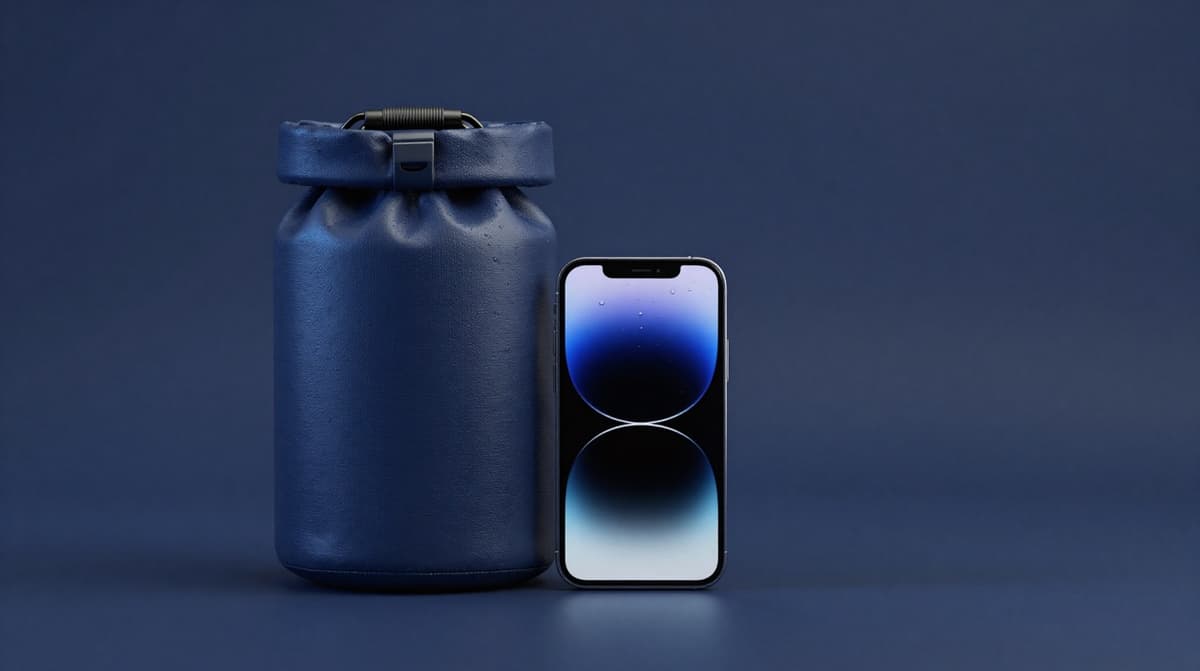
Once water is more than a rain shower, the IP rating is not enough. For water sports, the beach, a boat trip on the lake or the construction site your phone belongs in a truly waterproof dry bag or a dedicated protective pouch. These are built for immersion and also keep out sand and salt. Practical Swiss rules of thumb:
- Swimming in a lake: put the phone in the dry bag, do not trust IP68.
- Skiing: cold drains the battery, a power bank and a waterproof pouch in your inner jacket help.
- Rain and snow: IP67/IP68 are fine, just wipe dry afterwards.
You will find matching pouches with Swiss stock, free shipping from CHF 15 and a 2-year warranty in our Lifestyle & Outdoor section.