
USB-C or Lightning: Which Cable Does Your Device Need?
Contents5
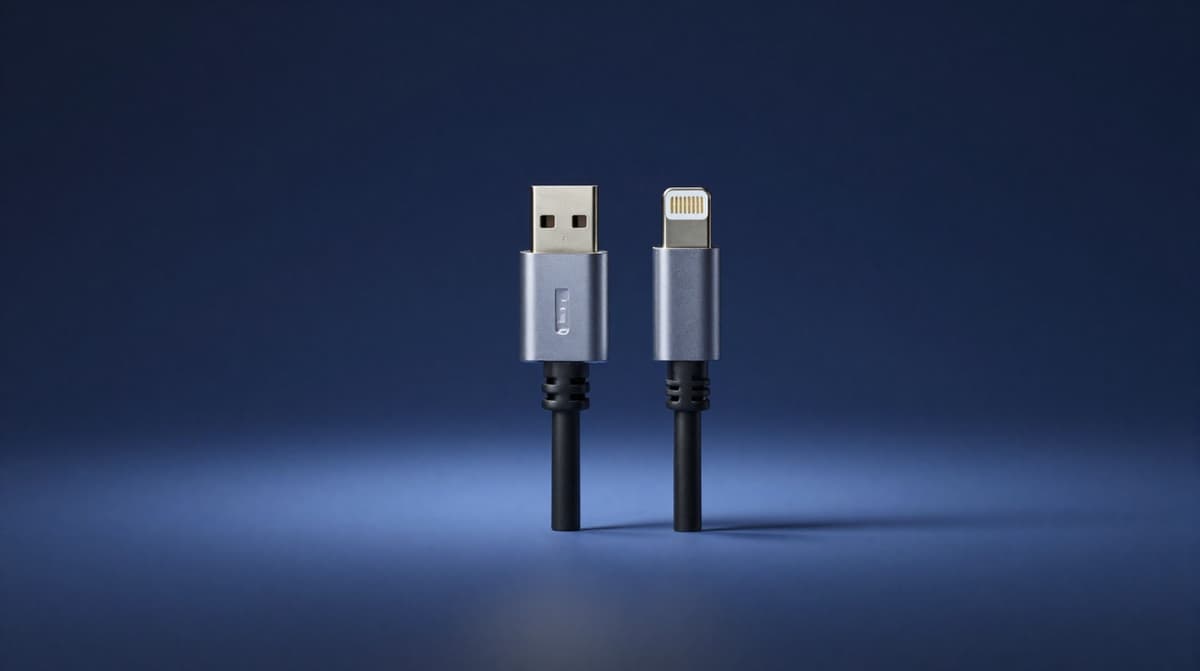
The question of USB-C or Lightning has come up in nearly every Swiss household since autumn 2023. With the iPhone 15, Apple moved to USB-C, while older iPhones and many accessories still use the Lightning port. In this guide you will learn which connector belongs to which device, where the technical differences lie and how to make sensible use of your existing cables.
Why the switch from Lightning to USB-C happened
Lightning was the Apple standard for over ten years, introduced in 2012 with the iPhone 5. USB-C, by contrast, is an open industry standard that Android phones, tablets and laptops have long used. The EU common-charger rule accelerated the change: from late 2024, new smartphones sold in the EU must offer USB-C. Apple therefore completed the switch with the iPhone 15 (September 2023). For you, this mainly means one thing: one cable for almost everything.
Which devices still use Lightning?
Not every Apple device has moved to USB-C yet. These still charge via Lightning:
- iPhone 14, 13, 12, 11, SE and all older models
- AirPods 2nd and 3rd generation with a Lightning case
- AirPods Pro (1st generation) and older accessories
- Various accessories such as older Magic Keyboards
If you own one of these, you still need a Lightning cable or a suitable adapter. You will find replacement cables in our cables section, shipped from Swiss stock.
Which devices use USB-C?
USB-C is now the new standard on almost all current devices:
- iPhone 15, 16 and newer (all variants)
- iPad, iPad Air, iPad Pro and iPad mini of current generations
- MacBook Air and MacBook Pro
- AirPods Pro 2 (USB-C version) and AirPods Pro 3
- Practically all Android smartphones and tablets
Lightning and USB-C compared directly
Technically, the two connectors are worlds apart. USB-C transfers data far faster and delivers more power for charging:
| Feature | Lightning | USB-C |
|---|---|---|
| Data rate | up to 480 Mbit/s (USB 2.0) | up to 40 Gbit/s (Thunderbolt/USB4) |
| Charging power | approx. 20–30 W | up to 240 W (USB-C PD 3.1) |
| Reversible (both sides) | yes | yes |
| Standard | Apple proprietary | open industry standard |
| Typical devices | iPhone 14 and older, old AirPods | iPhone 15+, iPad, MacBook, Android |
For fast charging, the charger matters as much as the cable: a USB-C power adapter with Power Delivery (PD) and at least 20 W charges an iPhone 15 to around 50 percent in roughly 30 minutes.
What to do with old Lightning gear
A full replacement is rarely necessary. Here is how to get the most out of your existing kit:
- Keep your cables: As long as you use an iPhone 14 or older AirPods, your Lightning cables stay in service.
- Use an adapter: An adapter from USB-C to Lightning connects new power adapters with old devices and vice versa.
- Standardise on one port: Once all your devices are USB-C, a single cable type covers everything, the proverbial one-cable household.
All our cables, chargers and adapters ship from Swiss stock, with free A-Post delivery from CHF 15 and a 2-year warranty. That way you find the right solution for every device, whether USB-C or Lightning.