
The old white charging cube: bin it or keep it?
Contents3
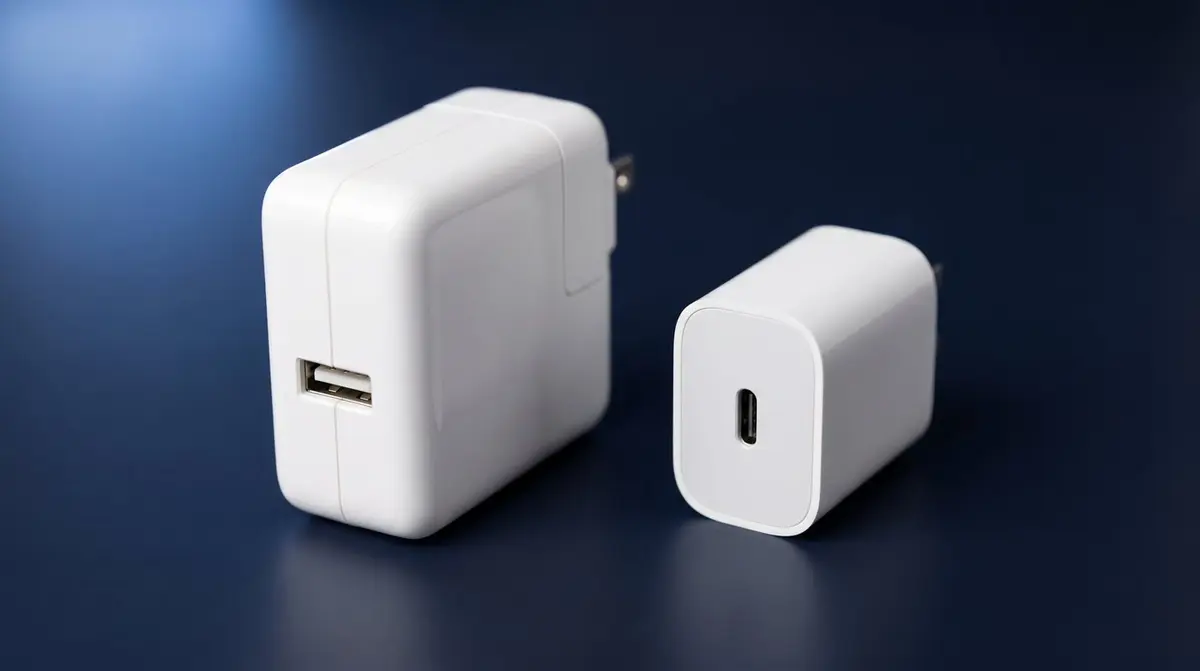
The drawer holds three white cubes, a black Samsung plug and some adapter with no markings at all. They all still work. That is exactly the problem: they work, but they technically cannot do what a current phone expects.
USB-A cannot do Power Delivery
Fast charging today runs on USB Power Delivery. Charger and device briefly negotiate which voltage should flow, usually 9 or 12 volts instead of 5. That protocol requires a USB-C socket. A USB-A port cannot do it, however good the adapter is.
So a USB-A charger stays at 5 volts. The old Apple cube delivers 5 watts, better models 10 to 12. An iPhone takes no harm from it, it simply charges slowly. Older Android phones with Quick Charge reached up to 18 watts over USB-A, but current Samsung models use USB-C for that as well.
| Old USB-A cube | USB-C at 20 watts | |
|---|---|---|
| Power | 5 to 12 watts | 20 to 30 watts |
| iPhone to 50 percent | around 90 minutes | around 30 minutes |
| Tablet | barely charges while in use | charges reliably |
| Laptop | not possible | possible from 45 watts |
Where the old adapters still do good work
Not everything needs to charge fast. Overnight on the nightstand the duration is irrelevant, and the slow cube is arguably the gentler route. The same goes for devices that draw little anyway:
- Charging cases for earbuds and headphones
- Bluetooth speakers, bike lights, torches
- E-readers and older tablets
- As a guest charger in the living room, with a USB-A cable attached
If you want to buy just one new adapter, get 30 to 45 watts with a USB-C port. That charges a phone quickly and an iPad too. Why those adapters are smaller than the old ones despite more power is explained in GaN chargers.
When an adapter belongs in recycling
Age alone is no reason. These signs are: a discoloured or warped housing, a plug that sits loose in the socket, crackling when you plug it in, or an adapter that gets clearly hotter than hand-warm. Adapters with no markings at all, no manufacturer and no volt or amp rating should also go. In Switzerland every retailer takes electrical waste back free of charge, with or without a new purchase.