
What is noise cancelling?
Contents6
You are sitting on the train, trying to enjoy music or a podcast – and you keep turning up the volume because everyone around you is talking and the carriage is rattling? This is exactly where headphones and earbuds with noise cancelling come in: they block out distracting ambient noise before it reaches your ear. In this guide you will learn how the technology works, where its limits are and who benefits most from it.
How active noise cancelling (ANC) works
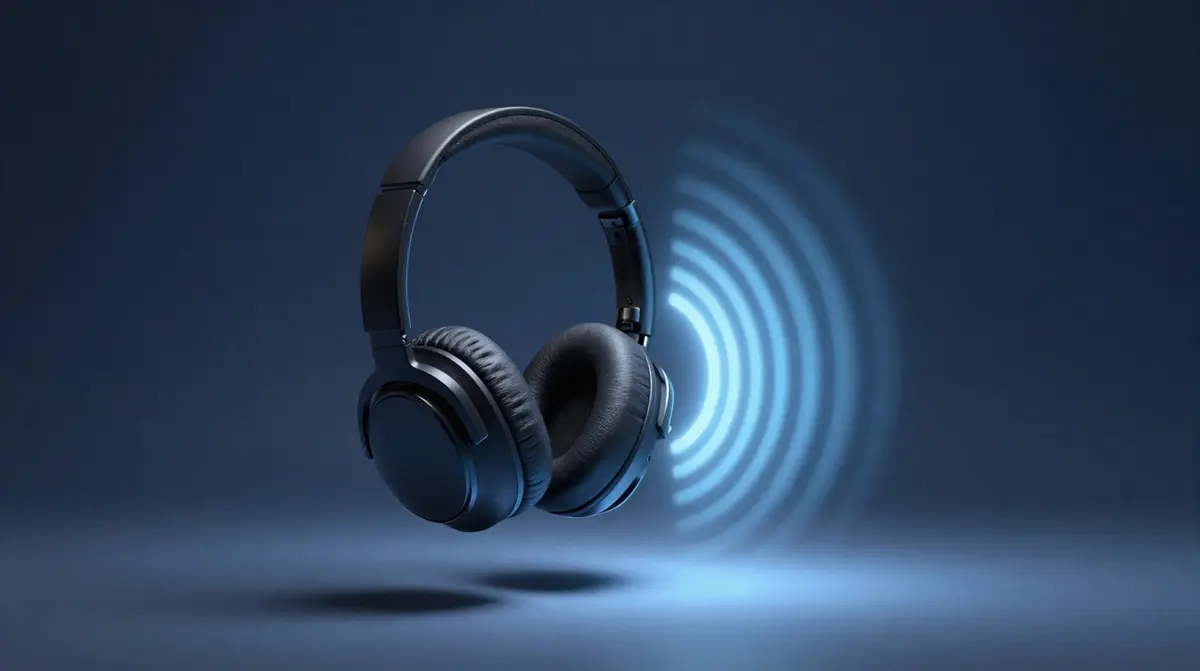
Active noise cancelling – usually abbreviated to ANC – relies on tiny microphones built into the headphones. They constantly measure the noise around you. The electronics calculate an exactly inverted sound signal in real time, the so-called anti-noise, and mix it inaudibly into the playback. Sound wave and counter wave cancel each other out – the noise disappears before you consciously notice it.
This works best with low, steady sounds: the hum of a bus engine, the drone inside an aircraft, ventilation systems or the rattling of a train. Sudden, high-pitched sounds such as voices or clattering keyboards can only be softened, not fully removed.
Active vs. passive noise isolation
Besides the active technology there is passive isolation: thick ear pads on over-ear headphones or well-fitting silicone tips on in-ears block part of the noise purely mechanically. The two approaches complement each other – good ANC models always combine both.
| Feature | Active noise cancelling | Passive isolation |
|---|---|---|
| How it works | Microphones + anti-noise | Sealing via pads or silicone tips |
| Works best with | Low, steady noise | High frequencies |
| Needs power | Yes, slightly reduces battery life | No |
| Price | Usually higher | Included in every pair of headphones |
What noise cancelling does for you in everyday life
- Commuting: Trains, trams and buses become noticeably quieter – music and podcasts come through more clearly.
- Focus at the office: Conversations in the open-plan office fade into the background so you stay in the flow.
- Travelling: On a plane, ANC noticeably dampens the monotonous engine drone – you arrive more relaxed.
- Hearing protection: With the noise gone you can listen at a lower volume – which protects your hearing in the long run.
Headphones or earbuds with ANC?
Over-ear headphones enclose the whole ear and therefore offer the best combination of passive and active attenuation – ideal if you want to shut the world out completely. In-ear buds are far more compact, seal the ear canal with silicone tips and achieve very good ANC results these days. For daily commuting with little luggage they are often the more practical choice. You will find both designs in our headphones category.
Transparency mode: staying aware of your surroundings
Most ANC models also offer a transparency or ambient mode. The microphones deliberately pass ambient sound through to your ear – handy when you do not want to miss an announcement on the train or need to say a quick word at the checkout without removing your earbuds. You usually switch between ANC and transparency with a tap or via the app.
What to look for when buying
- ANC quality: Good models offer several levels of noise reduction or adjust it automatically.
- Battery life with ANC enabled: Manufacturer figures often apply without noise cancelling – expect a little less.
- Fit and seal: ANC can only work properly if the headphones seal well.
- Transparency mode: In everyday use almost as important as the ANC itself.
In short: noise cancelling is not a gimmick but one of the most useful audio features of recent years. Whether you prefer large over-ears or compact in-ears – you will find the right model for every budget in the RPD.ch audio range.