
Caring for a Leather Case: Patina, Not Wear
Contents6
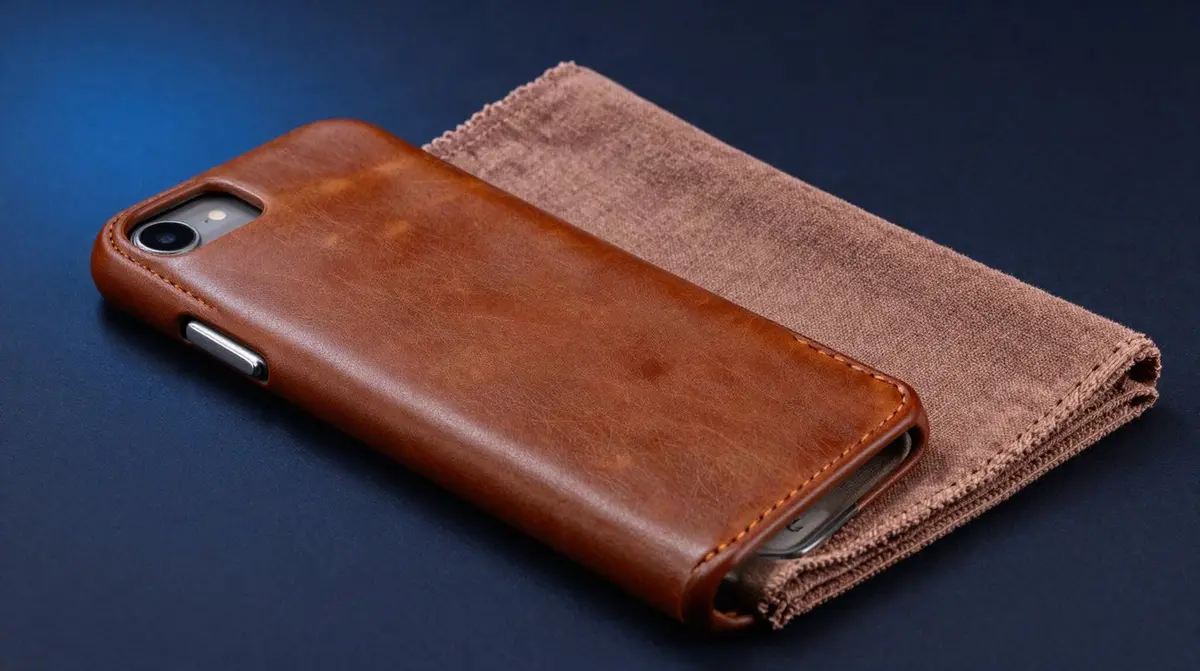
After two weeks the new leather case no longer looks like the photo. Corners are darker, there are pressure marks, maybe a pale line from a keyring. The first reflex: wrong purchase. In fact this is exactly the point where real leather starts to get interesting.
Why leather ages differently in the first place
Plastic and silicone are finished when they leave the factory. Every change after that is wear. Leather is a skin with an open structure: it takes up oils from your hands, reacts to light and darkens where it is handled most. The result is called patina, and it turns out different on every single piece.
It shows most clearly on oil-wax leather. It is impregnated with oils and waxes that shift under pressure. Run a fingernail across it and a pale line appears — rub it briefly with your thumb and it is gone again. That is not a defect, that is the construction.
The care routine in one sentence
Wipe it occasionally with a dry, soft cloth. That is all.
Leather that sits in your hand every day picks up enough oil by itself. If you want to do more, use a colourless leather balm very sparingly — once a year is plenty, and less is better than more. Too much balm leaves the surface greasy and attracts dust.
Three mistakes that genuinely ruin leather
- Wet plus radiator. Leather that has got wet should dry at room temperature, never on a radiator or with a hairdryer. Fast drying pulls out the oils, the leather goes hard and cracks at the edges.
- Cleaning products. Alcohol, disinfectant wipes and washing-up liquid dissolve exactly the oils that keep leather supple. A damp cloth is enough, with a drop of mild soap if needed.
- Weeks of direct sun. On a dashboard in summer, light leather bleaches and dark leather turns brittle.
What happens over time
| Period | What you see | Normal? |
|---|---|---|
| first weeks | corners darken, first pressure marks | yes — the leather is taking shape |
| 3–6 months | even sheen on the gripping surfaces | yes |
| 1 year and beyond | noticeably darker than new, softer | yes, that is the patina |
| any time | hard, cracked edges | no — usually dried too fast |
How to recognise good leather
The smell gives a lot away: real leather smells of leather, imitation of plastic. The cut edge shows a fibrous structure on real leather, a smooth dividing line on coated fabric. And the back feels rough, not like textile.
Manufacturers who specialise in it name the type of leather — iCarer, for instance, distinguishes oil-wax, vintage and nappa, which differ clearly in feel and in how they age. If the packaging says only «leather» with no further detail, it is often coated split leather, which flakes rather than ages. There is an overview with a model filter under genuine leather cases.
When it does go wrong
A water stain often disappears by itself if the leather dries through completely and slowly — the whole piece, not just the spot. Scratches in oil-wax can be worked back with a thumb and a little warmth. Deep cuts stay. But after a few months those simply belong to the case too.