
Phone Case Materials Compared: Silicone, TPU, Leather & Co.
Contents4
When buying a new case, the phone case material mostly decides how well your device is protected, how it feels and how long the case stays good-looking. Silicone, TPU, polycarbonate, aramid or leather each have strengths and weaknesses. This guide compares the key materials and tells you which one fits your daily life best.
The main case materials at a glance
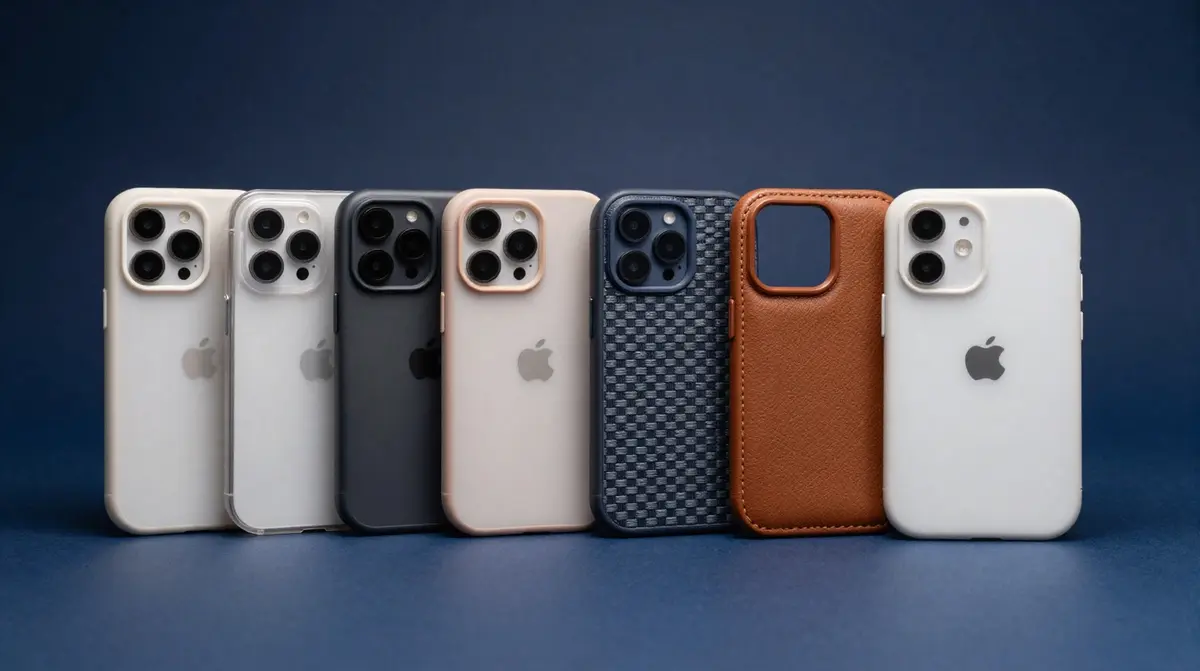
Roughly, phone cases split into soft, hard and hybrid materials. Soft cases (silicone, TPU) grip well and cushion drops, hard cases (polycarbonate) are slim and rigid, and hybrids combine both. Natural materials like aramid and leather occupy the premium niche.
Silicone
Classic liquid silicone (like the original Apple cases) feels velvety and sits very securely in the hand. It cushions drops well but attracts dust and lint and can wear at the edges over time. Ideal for anyone who loves a soft feel.
TPU (thermoplastic polyurethane)
TPU is the workhorse: flexible, shock-absorbing and cheap. Clear TPU cases show off the device design but tend to yellow without UV protection. High-quality versions with an anti-yellowing coating stay clear longer. There is also recycled TPU for more sustainability.
Polycarbonate / hardcase
Hard shells made of polycarbonate (PC) are especially slim and rigid. They protect well against scratches but cushion drops less than soft materials. Perfect for minimalists who want a thin case.
TPU-PC hybrid
Combining a soft TPU frame with a hard PC back is the most popular compromise. Raised edges protect the display and camera, and drop resistance is excellent. Almost all rugged outdoor cases rely on this.
Aramid / carbon
Aramid fibre (related to Kevlar) is extremely light, thin and elegantly woven. These cases are pricey but incredibly slim and barely interfere with MagSafe. Ideal for fans of a minimalist look with premium ambitions.
Leather & faux leather
Genuine leather develops a nice patina, while faux leather (often from recycled fibres) is easier to care for and cheaper. Both look classy but offer only medium drop protection. Business-ready and pleasantly warm in the hand.
Big material comparison
| Material | Drop protection | Grip | Slim | Yellows | Price |
|---|---|---|---|---|---|
| Silicone | Good | Very good | Medium | No | CHF 15–30 |
| TPU (clear) | Good | Good | Medium | Yes, unprotected | CHF 10–25 |
| Polycarbonate | Medium | Medium | Very slim | No | CHF 15–30 |
| TPU-PC hybrid | Very good | Good | Medium | Rarely | CHF 20–45 |
| Aramid | Medium | Good | Very slim | No | CHF 40–80 |
| Leather | Medium | Good | Medium | No | CHF 30–70 |
Which material for whom?
- Cyclists & outdoor: rugged TPU-PC hybrids with raised edges. Pair them with a phone chain so the device hangs safely while you ride.
- Business: leather or faux leather look serious and feel premium.
- Minimalists: thin polycarbonate or aramid cases for the slimmest look.
- MagSafe users: aramid and specially certified cases with a built-in magnet ring hold MagSafe chargers reliably.
Sustainability and care
More and more makers rely on recycled TPU and bio-based polycarbonate. These cases protect just as well and save resources. Clean silicone and TPU regularly with a little soapy water so dust does not settle. Also think about matching screen and camera protection — the best case helps little if the glass is unprotected. All our cases ship from Swiss stock, with free shipping from CHF 15 and a 2-year warranty.